
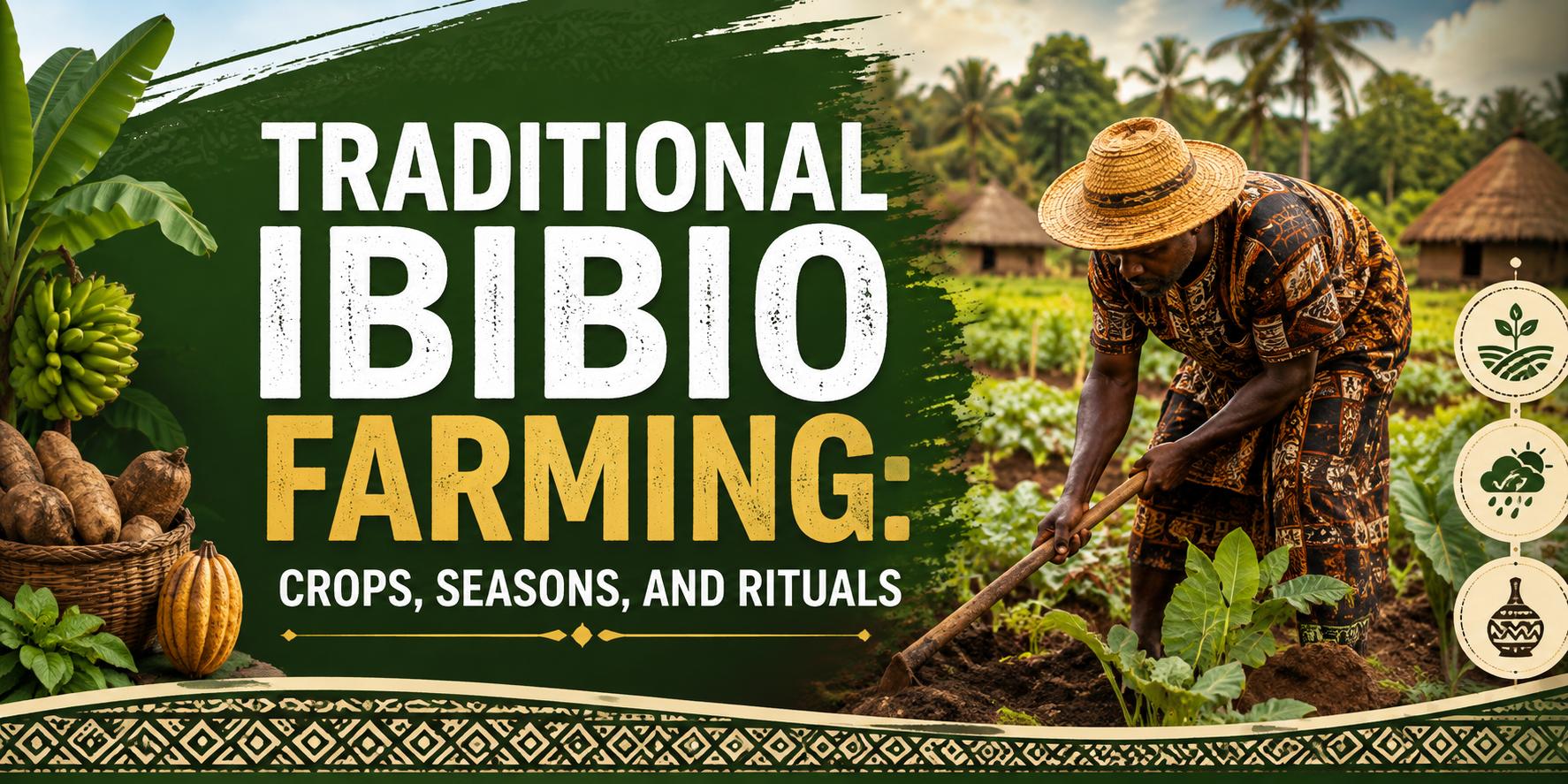
Traditional Ibibio Farming: Crops, Seasons, and Rituals
For generations, the Ibibio people have been farmers. Traditional Ibibio society used to and still today is mainly engaged in the business of agriculture. The climate is warm and humid, with abundant rainfall, and the people have developed a knowledge of how to make the best use of nature, instead of fighting it. But traditional Ibibio farming was never just about planting and harvesting. It was a life that was dictated by the seasons and by rituals and rooted in the knowledge and wisdom that were handed down from parents to children. For a little walk, let us go through the old Ibibio farm.
The Ibibio farming season is dependent on the rains. The wet season begins around March or April and lasts until mid‑November. The dry season starts in mid‑November and continues until March. The principle farming season is from February onwards. The farmer burns down the bush that has been allowed to regrow for 3-7 years. This is called ‘fallowing’, which gives the soil strength. The Ibibio farmer knew that land too needs rest, as do men. After the bush has been removed, the farmer prepares the soil. There is no traditional ploughing of lands in the Ibibio community. Instead, they use short‑handled hoes to dig shallow holes. Sometimes they just cut open the nutlets and sow their seeds. This will not harm the soil and keep its structure intact.
The Ibibio grow yam, cassava and cocoyam as their staple food crops. These are complemented with maize, plantains, bananas and a range of vegetables. Yam was the most important crop in pre‑colonial times. It was planted in the dry season (February to April) and was harvested during the wetter season (September to December). Yams were a prestige crop cultivated primarily by men and were central to ceremonies and festivals. Later, cassava was introduced but now plays a significant role in crop farming. Cassava can be harvested all year round, unlike yams. It is a food security crop that enables families to have food on their plates during lean periods. Others that were also cultivated were cocoyam, plantains and vegetables like fluted pumpkin, okra and spinach. The family had variety and nutrition from these crops.
The Ibibio farmer understood that planting was more than just putting seeds into the ground. It needed care, attention and timing. One of the most important techniques was the use of mounds or heaps. Prior to planting, the farmers would heap up earth at big mounds. The mounds helped against rotting crops during the heavy rains. They also gave the soil time to dry out and provide roots ample room to spread. Crop rotation was also practised by the farmer. He was aware that rotation of crops on the same land over successive years would cause the loss of fertility of the soil. He rotated his crops, thus maintaining the productivity of the land. Seed selection also was an important practice. The best plants from the fields would be selected by their farmers and their seeds stored for the upcoming harvest. This was a primitive method of plant production known as “farm breeding.
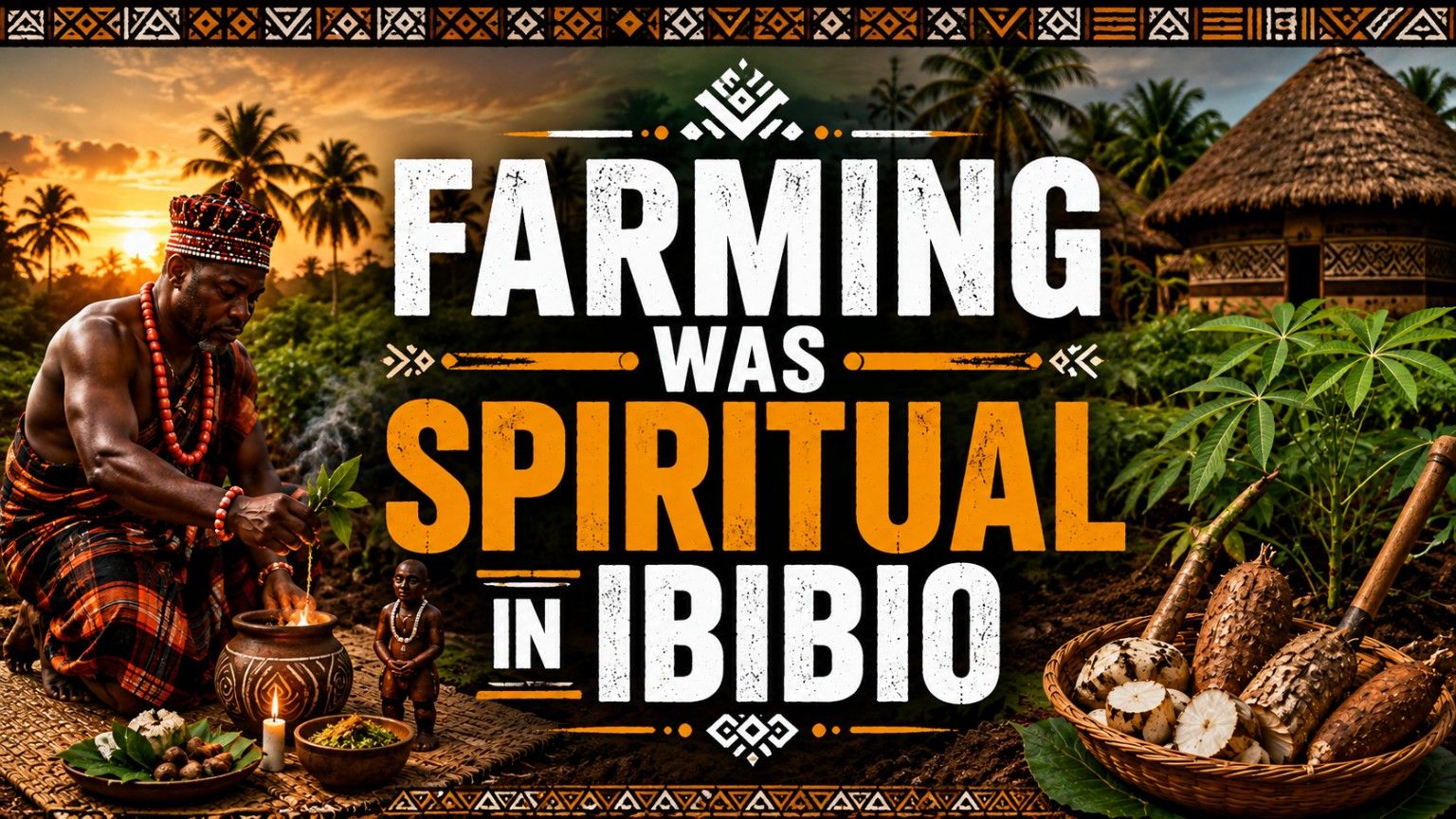
The Ibibio farmer’s farming was not merely practical. It was also spiritual. The farmer felt that achievement in farming was not only the result of hard work but also of the goodwill of the ancestors and the gods. Before planting was undertaken, rituals were carried out to make sure that the crop would be productive. During the old times, gifts were given to the gods in order to ensure good luck on crops. The farmer would cleanse the farm and pray to the land. Additionally, there were numerous beliefs around planting. For instance, yam planting could not be done on an empty stomach. Before the farmer sows, he must first eat so that the yams will be full and healthy. When herbs had been planted before drinking of alcohol, it was thought that the plants would have white leaves and no growth. A thin person was not allowed to plant maize – otherwise the stalks would be thin as well.
The farmer also felt that burning seed cobs on the farm would kill the young plants because of blast. It was believed that the crop favored/disliked certain hands for the fluted pumpkin. Only the hands that were good were invited to plant it, so it would yield a good amount. Customs of coconut trees too. One grandmother would plant a coconut tree for every grandchild. The planter would be on a low stool when planting so that the tree would be short and productive. The beliefs of these people may seem to us today to be bizarre. But they show great respect for this land, and they want to make every effort to survive as a family. For Ibibio farmers, farming was a collaborative effort with nature and with the spiritual world.
In olden Ibibio days, farming was not an individual’s work. It was the outcome of the work of collectives, families, neighbours and whole villages working together as one. Kinship groups organised it, and everyone was supported if they needed it. Palms or bamboo were sometimes planted around the field to define them. This is not only boundaries but also extra resources such as palm oil and construction materials.
A wisdom gift is the traditional farming practice of the Ibibio. They teach us about our ancestors and their understanding of sustainability, soil health and community. They played along with the natural flow. Many of these practices are now disappearing today. The old days are gone, and what our elders knew is fading. Yet, we feel this is information that ought to be maintained.